

Disclaimer
This article is intended for informational purposes and reflects the state of published research and industry practice as of mid 2026. It is not professional security advice. Your specific environment, threat model, and regulatory obligations will shape how these principles apply to your situation.
For Security Leaders
Open-source artificial intelligence vulnerability research tooling is becoming real security infrastructure, but it is not yet a finished autonomous function. The risk is not that every model suddenly becomes a hacker. The risk is that teams adopt finding volume before they can verify evidence, scope authority, and prove safe remediation.
What this means for your organization:
Tooling maturity is uneven: Discovery, proof, patching, and evaluation tools require different trust levels.
Evidence quality is the control point: Raw findings matter less than reproducible proof and reviewer-ready artifacts.
Automation risk shifts downstream: Bad triage and unsafe patches can create business risk after the model appears useful.
What to tell your teams:
Require every model-assisted finding to include replayable evidence.
Separate discovery from validation before accepting results.
Use these tools first where build, crash, or exploit oracles exist.
Keep patch generation advisory until semantic review is routine.
The field has enough tooling to run experiments, but not enough maturity to buy the category as finished
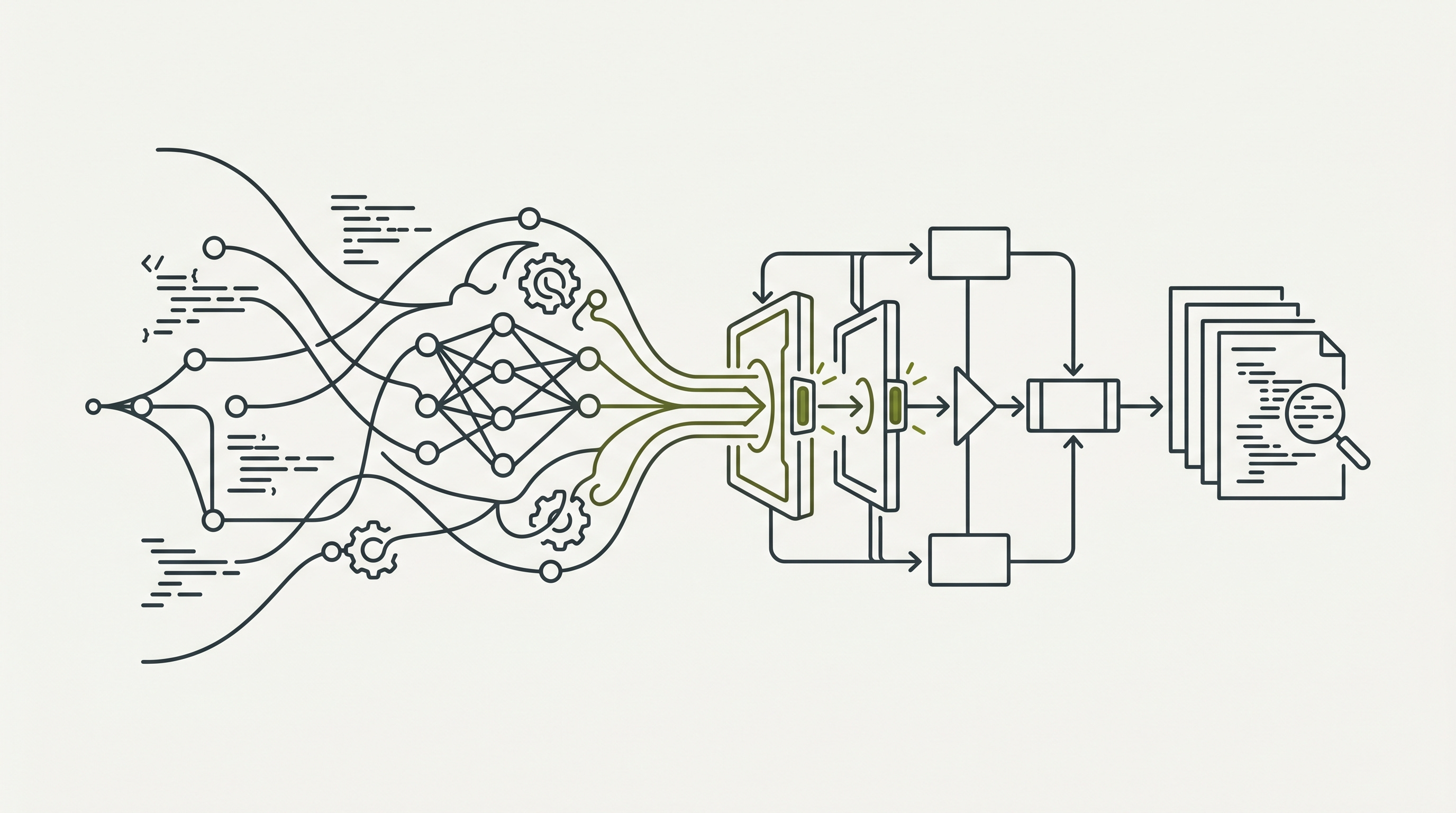
The previous piece made the case that proof-generating AI changes the cost of confirming a vulnerability. This one starts one layer lower: a team can now assemble a real open-source AI vulnerability research stack, but the assembly still matters more than the logo on any single component. It can use OSS-Fuzz-Gen to generate fuzz targets, SHERPA to reason about harness entry points, OpenHack to structure a whitebox review, Vulnhuntr to trace Python attack paths, PentestGPT or hackingBuddyGPT in authorized lab settings, OSS-CRS for CRS experimentation, and benchmarks such as CVE-Bench, NYU CTF Bench, CyberSecEval, ZeroDayBench, and Anamnesis to measure pieces of the workflow. The first thing I would separate is the stack from the story being told about it: these tools are real, but they do not add up to a turnkey autonomous vulnerability researcher.
That is the boundary for this article. It does not re-argue exploitation timelines, triage economics, or why proof generation changes remediation queues. Those were the prior article’s job. The narrower question here is what a practitioner can actually run, what still requires research-grade infrastructure, and where the public evidence stops.
The evidence points to a more useful conclusion. AI-assisted vulnerability research is becoming infrastructure. The working systems bind model reasoning to older security machinery: fuzzers, static analyzers, build systems, debuggers, harnesses, validators, budget controls, and human approval gates. The model supplies semantic search, code understanding, exploit strategy, patch suggestions, or triage assistance. The surrounding pipeline decides whether the work is scoped, executable, logged, reproducible, and safe to act on.
That distinction matters because the public conversation still compresses several different capabilities into one phrase. A system that solves a CTF challenge is not proving that it can discover a novel vulnerability in production code. A tool that exploits a known CVE in a container is not proving that it can find the bug without being told where to look. A model that stops a crash is not proving that the patch preserves intended behavior. The tooling stack is useful precisely when those differences are kept visible.
A practical map has four bands. Some components are production-adjacent and runnable today with the right operator, including OSS-Fuzz-Gen, Vulnhuntr, and some OpenHack-style workflows. Some are real but fragile CRS infrastructure, including OSS-CRS, Buttercup, Atlantis, and SHERPA. Some are research-grade artifacts that answer narrow evaluation questions, including ChatAFL, Fuzz4All, hackingBuddyGPT, CVE-Bench, NYU CTF Bench, CyberSecEval, and ZeroDayBench. Some are high-signal case studies, such as Anamnesis and the o3 kernel CVE work, that show what is possible under expert-controlled conditions without proving broad autonomy. In this framing, production-adjacent means runnable against real code with documented setup and objective evidence outputs, while still requiring expert operation and human review.
The strongest systems constrain the job before asking the model to reason
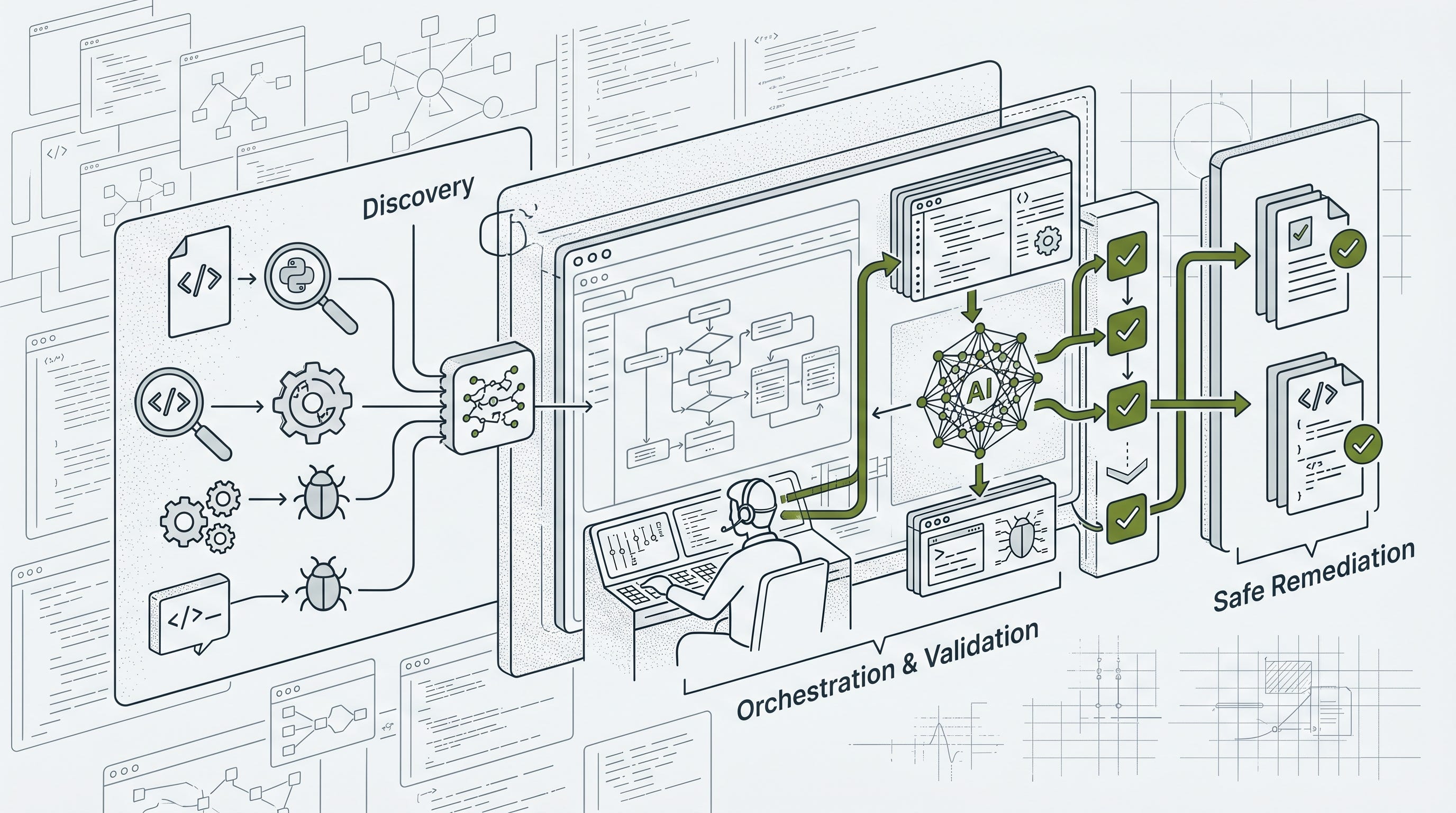
The most important open-source event in this space was not a GitHub release by itself. It was the forced integration created by DARPA’s AI Cyber Challenge. I read the finalist systems as evidence of an engineering pattern before I read them as evidence of model capability. They had to discover vulnerabilities, produce proofs, submit patches, and operate under competition infrastructure. Official OpenSSF reporting records 54 million lines of code, 70 challenges, 54 unique synthetic vulnerabilities discovered, and 43 patched. The SoK paper that followed AIxCC is the better source than the scoreboard because it shows the pattern underneath the results: LLMs mattered, but they mattered most inside systems that still used conventional program analysis.
The winning and finalist systems make the same point from different directions. Atlantis combined multiple agents, fuzzing, root cause analysis, patching components, LiteLLM routing, build caching, and orchestration. Buttercup took the opposite design posture: deterministic workflow decomposition, traditional fuzzing and static analysis, and LLMs in bounded roles where reasoning helped. FuzzingBrain emphasized many independent strategies and rapid iteration. Artiphishell, BugBuster, and Lacrosse explored still other coordination models. The lesson is not that one model won. The lesson is that orchestration quality, stability, and validation determined whether model capability turned into usable security work.
Open source does not mean operationally reproducible
The raw AIxCC releases also expose the first maturity gap. Atlantis is public. The source is real. Team Atlanta’s own post-final materials still describe a system built around Azure, Terraform, Kubernetes, Tailscale, and external LLM services. That is not a criticism of Atlantis. It is the honest shape of a competition-grade research system. A repo can be open while the operational envelope remains too heavy for most development teams. Open source is not the same as runnable, runnable is not the same as reproducible, and reproducible is not the same as safe to automate.
OSS-CRS exists because of that gap. The project attempts to standardize the interface for LLM-based autonomous bug-finding and bug-fixing systems, decouple CRS logic from AIxCC-specific infrastructure, and provide budget-aware orchestration. Its paper reports porting Atlantis and finding previously unknown bugs across OSS-Fuzz projects. OpenSSF’s May 28, 2026 newsletter confirms OSS-CRS as a sandbox project, which makes it one of the clearest signs that the AIxCC artifacts are moving from contest output toward shared infrastructure.
The caveat should stay attached. OSS-CRS is a portability layer, not proof that every finalist CRS is now equally easy to run. Its validation centered on Atlantis. The AIxCC archive also still lists CRUMBS, the Cyber Reasoning Unified Model Benchmark System, as being processed before release. The field is becoming more reproducible, but the reproducibility story is not finished.
Practitioner tools are useful when they stay narrow
The same maturity pattern appears in the tools a practitioner might actually try first. OpenHack, released by Hadrian in May 2026, is compelling because it treats vulnerability research as a workflow over durable artifacts. Reconnaissance output, scenarios, expert findings, triage decisions, and reports are written to disk. A human approves phase transitions. An independent triage stage reviews candidate findings rather than letting the same model accuse and validate. That design is practical. The evidence base is still young and mostly maintainer-provided, so the safe classification is promising practitioner workflow, not benchmark-proven autonomous finder.
Vulnhuntr is useful because it narrows the job. It targets Python projects and traces remotely exploitable vulnerability classes such as file inclusion, arbitrary file overwrite, remote code execution, server-side request forgery, SQL injection, cross-site scripting, and insecure direct object reference. Its CLI supports Claude, GPT, and experimental Ollama usage, with the maintainers recommending Claude based on their results. This is exactly the kind of bounded application where model reasoning can be helpful: one language family, known vulnerability classes, code-path tracing, and human validation at the end.
The same narrow-scope rule applies to the research tools that sit adjacent to Vulnhuntr. VulnLLM-R is significant because it ships a specialized open-weight vulnerability reasoning model rather than only an API-dependent agent. LLM4Vuln is useful because it tries to separate what the model can reason about from what it gains through retrieval, prompt optimization, or extra context. HPTSA belongs in the exploit-agent lineage because it decomposes web exploitation into planner and specialist-agent roles. None of these tools changes the adoption order by itself. They make the stack more complete by showing how detection, reasoning, and exploitation can each be isolated and measured.
PentestGPT and hackingBuddyGPT sit closer to agentic offensive workflows. PentestGPT has a USENIX Security 2024 paper, public code, Docker-oriented setup, and support for OpenAI-compatible local servers. hackingBuddyGPT focuses on Linux privilege escalation over SSH and controlled vulnerable machines. Both are real. Both are useful in authorized labs. Neither should be used as evidence that fully autonomous real-world compromise is solved. Their value is that they make agent behavior observable in constrained environments.
The fuzzing tools are more mature where they inherit mature infrastructure. OSS-Fuzz-Gen attaches LLM target generation to the OSS-Fuzz ecosystem and evaluates generated harnesses through build and coverage feedback. ChatAFL applies LLMs to protocol fuzzing, where grammar extraction and state recovery are hard for conventional fuzzers. Fuzz4All uses models for universal input generation and mutation across compilers, solvers, runtimes, and other systems. These tools are not magic scanners. They are research and engineering aids for teams that already understand fuzzing, harnesses, coverage, oracles, and crash triage.
The benchmark layer shows which claims are safe
The benchmark evidence is most useful when it is read by task type. NYU CTF Bench measures tool use and offensive reasoning against dockerized CTF challenges. That is valuable, but CTFs reward puzzle conventions. CVE-Bench evaluates exploitation of real critical web application CVEs in containers. That is closer to real exploitation, but it is still known-vulnerability work. CyberSecEval and PurpleLlama measure model risk and exploit behavior through a broad benchmark family, including randomized canary-style exploit tasks. That is useful for model comparison and safety regression, but synthetic tasks do not capture production onboarding.
ZeroDayBench moves toward the question defenders actually care about: can an agent find and patch unseen critical vulnerabilities in open-source codebases? The 2026 paper’s answer is cautionary. Frontier agents are useful in some high-information settings, but they are not dependable autonomous zero-day discovery and patching systems. That is not a disappointing result. It is a useful boundary marker.
The patching boundary is the harshest one. Team Atlanta’s 2026 patch benchmark reports that a Claude Code baseline with Claude 3.7 Sonnet produced semantically correct patches for 33 of 63 crashes, about 52 percent, with semantic correctness around 62 percent. That means the interesting failure is no longer merely whether the agent can edit code. It is whether the edit preserves intended behavior after the obvious failure disappears. In production security, a patch that silences the crash and changes semantics is not a fix.
Exploit proof generation is in a different position because success can be checked more directly. Sean Heelan’s Anamnesis work used a real QuickJS zero-day, progressively harder mitigation settings, repeated runs, large token budgets, and executable success oracles. That makes it one of the highest-signal public demonstrations in the stack. It does not prove open-ended discovery. It shows that once a bug and target are constrained, exploit construction becomes a searchable engineering task where tokens, attempts, tools, and verifiers matter.
Heelan’s o3 and CVE-2025-37899 case should be placed in a third category: expert-mediated model-assisted discovery. The vulnerability is independently represented in NVD and vendor advisories. The artifact trail is public. The result is significant because a frontier model materially assisted a real kernel vulnerability finding. It is not evidence that an unsupervised agent can run a broad vulnerability research program. The expert selected the code, framed the question, judged the output, and connected the finding to a real vulnerability process.
Closed systems create pressure on this open-source stack without settling its maturity question. Glasswing, Mythos, Aardvark, Codex Security, and Daybreak suggest where commercial AI vulnerability research systems are moving, but their prompts, orchestration code, telemetry, validation corpora, and failure cases are not public. They can show the direction of travel. They cannot prove that an open-source team can reproduce the same operational envelope with public artifacts.
The right adoption question is which step has a verifier, not which model is smartest
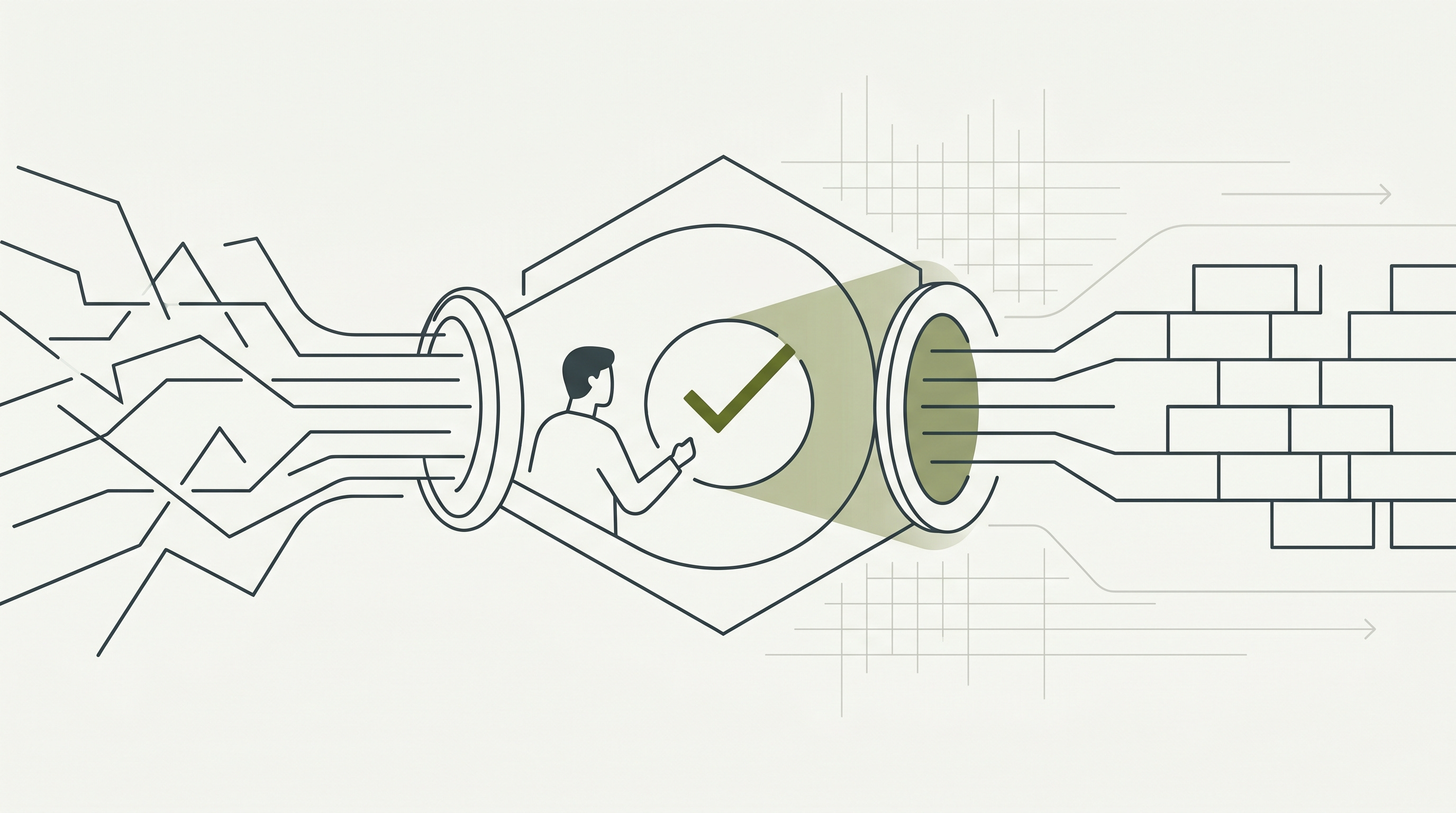
The evidence leads me to a specific adoption order, and I would make the verifier the first design constraint. Teams should begin where the workflow has an executable oracle. Fuzz target generation can be checked by build success, runtime behavior, coverage, and crash reproduction. Exploit proof construction can be checked by an observable effect in a controlled target. False-positive filtering can be checked by reviewer agreement and missed-true-positive sampling. Python reachability review can be checked by code-path evidence and proof-of-concept reproduction. Patch generation should remain advisory until semantic review and regression testing are part of the loop.
That ordering changes the procurement and engineering questions. A CISO should not ask only whether a tool uses a frontier model. The better questions are whether the tool exposes intermediate artifacts, logs prompts and model versions, separates finding from validation, supports replay, declares failure cases, constrains authority, and measures semantic patch acceptance. A security engineering lead should ask what happens after the model reports a finding: where the proof lives, how the triage decision is recorded, whether the dependency path is reachable, and what evidence lets a reviewer dismiss or accept the result without rerunning the entire hunt from scratch.
The category will mature as the public stack becomes more composable. OSS-CRS gives the CRS layer a shared interface. OSS-Fuzz-Gen and SHERPA strengthen harness generation. OpenHack gives whitebox review a durable artifact model. Vulnhuntr proves the value of narrow language and vulnerability-class scope. Benchmarks define the capability boundaries and keep the field honest. The missing product layer is the one that joins these pieces without hiding their failure modes.
The practical conclusion is therefore restrained but optimistic. Open-source AI vulnerability research tooling is no longer a set of toy demos. It is also not a finished autonomous security function. The strongest evidence points to a stack of constrained, inspectable, verifier-backed components. That is enough to begin serious adoption work, provided the organization measures confirmed evidence rather than raw findings and treats the model as one component inside a security system, not as the system itself.
Peace. Stay curious! End of transmission.
Fact-Check Appendix
Statement: Official OpenSSF reporting records 54 million lines of code, 70 challenges, 54 unique synthetic vulnerabilities discovered, and 43 patched in the AIxCC final context. Source: OpenSSF AIxCC DEF CON 33 recap | https://openssf.org/blog/2025/08/14/openssf-at-black-hat-usa-2025-def-con-33-aixcc-highlights-big-wins-and-the-future-of-securing-open-source/
Statement: DARPA and AIxCC sources identify Team Atlanta, Trail of Bits, and Theori as the top three AIxCC finalists. Source: DARPA AI Cyber Challenge results | https://www.darpa.mil/news/2025/aixcc-results
Statement: The AIxCC archive provides public competition artifacts and still listed CRUMBS as being processed before release at review time. Source: AIxCC archive and data explorer | https://archive.aicyberchallenge.com/ | https://archive.aicyberchallenge.com/data/
Statement: Atlantis is public, while Team Atlanta’s own post-final materials describe substantial deployment dependencies including Azure, Terraform, Kubernetes, Tailscale, and external LLM services. Source: Atlantis final repository and Team Atlanta post-final blog | https://github.com/Team-Atlanta/aixcc-afc-atlantis | https://team-atlanta.github.io/blog/post-afc/
Statement: OSS-CRS is an OpenSSF project and was confirmed in the OpenSSF May 28, 2026 newsletter as a sandbox project. Source: OSS-CRS repository, project page, and OpenSSF newsletter | https://github.com/ossf/oss-crs | https://openssf.org/projects/oss-crs/ | https://openssf.org/newsletter/2026/05/28/openssf-newsletter-may-2026/
Statement: OSS-CRS reports decoupling CRS logic from AIxCC-specific infrastructure, porting Atlantis, and discovering previously unknown bugs across OSS-Fuzz projects. Source: OSS-CRS paper | https://arxiv.org/abs/2603.08566
Statement: OpenHack was publicly released by Hadrian in May 2026 and uses a workflow over durable artifacts with human approval and triage stages. Source: OpenHack repository and Hadrian release post | https://github.com/hadriansecurity/OpenHack | https://hadrian.io/blog/openhack-giving-defenders-the-ai-workflow-for-vulnerability-discovery
Statement: Vulnhuntr targets Python projects and supports hosted Claude/GPT use plus experimental Ollama usage. Source: Vulnhuntr repository | https://github.com/protectai/vulnhuntr
Statement: VulnLLM-R is a specialized open-weight model and agent scaffold for vulnerability detection. Source: VulnLLM-R paper and model page | https://arxiv.org/abs/2512.07533 | https://huggingface.co/UCSB-SURFI/VulnLLM-R-7B
Statement: LLM4Vuln evaluates LLM vulnerability reasoning while separating model reasoning from external aids such as retrieval, added context, and prompt optimization. Source: LLM4Vuln paper | https://arxiv.org/abs/2401.16185
Statement: HPTSA decomposes web exploitation into planner and specialist-agent roles and belongs in the exploit-agent lineage rather than the general scanner category. Source: UIUC Kang Lab HPTSA repository and papers | https://github.com/uiuc-kang-lab/HPTSA | https://arxiv.org/abs/2404.08144 | https://arxiv.org/abs/2406.01637
Statement: PentestGPT has a USENIX Security 2024 paper and public implementation. Source: PentestGPT USENIX paper and repository | https://www.usenix.org/system/files/usenixsecurity24-deng.pdf | https://github.com/GreyDGL/PentestGPT
Statement: hackingBuddyGPT is a public framework for LLM-assisted Linux privilege escalation experiments over SSH-accessible targets. Source: hackingBuddyGPT repository and paper | https://github.com/ipa-lab/hackingBuddyGPT | https://arxiv.org/abs/2310.11409
Statement: OSS-Fuzz-Gen is Google’s public LLM fuzz target generation project, and false-positive mitigation has become an explicit industry-paper topic for the project. Source: OSS-Fuzz-Gen repository and FSE 2026 listing | https://github.com/google/oss-fuzz-gen | https://conf.researchr.org/details/fse-2026/fse-2026-industry-papers/4/Lessons-from-Mitigating-False-Positives-in-Google-s-OSS-Fuzz-Gen
Statement: ChatAFL is an NDSS 2024 LLM-guided protocol fuzzing system. Source: ChatAFL repository and NDSS paper | https://github.com/ChatAFLndss/ChatAFL | https://mboehme.github.io/paper/NDSS24-chatafl.pdf
Statement: Fuzz4All is an ICSE 2024 universal fuzzing system using large language models for input generation and mutation. Source: Fuzz4All repository and ACM DOI | https://github.com/fuzz4all/fuzz4all | https://dl.acm.org/doi/10.1145/3597503.3639121
Statement: CVE-Bench evaluates agents on 40 critical web application CVEs and reports up to 13 percent exploitation success for the evaluated leading agent framework. Source: CVE-Bench paper, repository, and ICML poster | https://arxiv.org/abs/2503.17332 | https://github.com/uiuc-kang-lab/cve-bench | https://icml.cc/virtual/2025/poster/46522
Statement: ZeroDayBench evaluates agents on 22 novel critical vulnerabilities in open-source codebases and frames current frontier agents as not yet dependable autonomous zero-day discovery and patching systems. Source: ZeroDayBench paper | https://arxiv.org/abs/2603.02297
Statement: NYU CTF Bench is a NeurIPS 2024 benchmark of dockerized CSAW CTF challenges for LLM agents. Source: NYU CTF Bench project, paper, repository, and NeurIPS abstract |
https://nyu-llm-ctf.github.io/
| https://arxiv.org/abs/2406.05590 | https://github.com/NYU-LLM-CTF/NYU_CTF_Bench | https://proceedings.neurips.cc/paper_files/paper/2024/hash/69d97a6493fbf016fff0a751f253ad18-Abstract-Datasets_and_Benchmarks_Track.html
Statement: CyberSecEval and PurpleLlama provide public benchmark infrastructure for cybersecurity model evaluation, including vulnerability exploitation and autonomous uplift documentation. Source: PurpleLlama repository and CyberSecEval docs | https://github.com/meta-llama/PurpleLlama | https://meta-llama.github.io/PurpleLlama/CyberSecEval/docs/benchmarks/vulnerability_exploitation | https://meta-llama.github.io/PurpleLlama/CyberSecEval/docs/benchmarks/autonomous_uplift
Statement: Team Atlanta’s 2026 patch benchmark reports a Claude Code baseline producing semantically correct patches for 33 of 63 crashes, about 52 percent, with semantic correctness around 62 percent. Source: Team Atlanta patch benchmark blog | https://team-atlanta.github.io/blog/post-patch-2026-ensemble/
Statement: Anamnesis evaluates exploit generation against a real QuickJS zero-day with repeated runs, token budgets, and objective exploit verification. Source: Anamnesis blog and repository | https://sean.heelan.io/2026/01/18/on-the-coming-industrialisation-of-exploit-generation-with-llms/ | https://github.com/SeanHeelan/anamnesis-release
Statement: CVE-2025-37899 is represented in NVD and vendor advisories as a Linux kernel ksmbd use-after-free issue, and Sean Heelan published an artifact trail describing o3-assisted discovery. Source: NVD, Ubuntu advisory, Heelan blog, and artifact repository | https://nvd.nist.gov/vuln/detail/CVE-2025-37899 | https://ubuntu.com/security/CVE-2025-37899 | https://sean.heelan.io/2025/05/22/how-i-used-o3-to-find-cve-2025-37899-a-remote-zeroday-vulnerability-in-the-linux-kernels-smb-implementation/ | https://github.com/SeanHeelan/o3_finds_cve-2025-37899
Statement: Closed or commercial systems such as Glasswing, Mythos, Aardvark, Codex Security, and Daybreak are used in this article only as directional context because their prompts, orchestration code, telemetry, validation corpora, and failure cases are not public in the same manner as open-source repositories and benchmark artifacts. Source: Cloudflare Glasswing reporting, Anthropic Glasswing update, OpenAI Aardvark announcement, and Daybreak reporting | https://blog.cloudflare.com/cyber-frontier-models/ | https://www.anthropic.com/research/glasswing-initial-update | https://openai.com/index/introducing-aardvark/ | https://thehackernews.com/2026/05/openai-launches-daybreak-for-ai-powered.html
Top 5 Authoritative Sources
SoK: DARPA’s AI Cyber Challenge | https://arxiv.org/abs/2602.07666
OSS-CRS: Liberating AIxCC Cyber Reasoning Systems for Real-World Open-Source Security | https://arxiv.org/abs/2603.08566
OpenSSF AIxCC recap and OSS-CRS project materials | https://openssf.org/blog/2025/08/14/openssf-at-black-hat-usa-2025-def-con-33-aixcc-highlights-big-wins-and-the-future-of-securing-open-source/ | https://openssf.org/projects/oss-crs/
Team Atlanta patch benchmark | https://team-atlanta.github.io/blog/post-patch-2026-ensemble/
CVE-Bench and ZeroDayBench | https://arxiv.org/abs/2503.17332 | https://arxiv.org/abs/2603.02297