

Disclaimer
This article is intended for informational purposes and reflects the state of published research and industry practice as of early 2026. It is not professional security advice. Your specific environment, threat model, and regulatory obligations will shape how these principles apply to your situation.
For Security Leaders
Coding assistants have transformed into autonomous agents capable of modifying source code and executing system commands. This shift creates a direct path from untrusted instructions to your production environment, bypassing traditional security assumptions. The organizational risk is no longer just poor code quality, but the introduction of a new, privileged actor into your software supply chain that lacks a formal identity and control boundary.
What this means for your organization:
Expanded attack surface. Malicious instructions in external repositories or issue comments can now trigger unintended system actions through the agent.
Eroding review rigor. The high volume of plausible, agent-generated code can lead to developer overreliance and a decline in semantic security review.
Shadow authority risk. Agents often operate with the broad, unmonitored permissions of the developer’s workstation rather than scoped, audited identities.
What to tell your teams:
Treat agents as participants. Explicitly inventory all agentic tools and integrate them into existing secure development lifecycle gates.
Harden the runtime. Move agentic workflows into sandboxed environments with scoped credentials and restricted network access.
Mandate human approval. Require explicit manual review for every command execution and file write initiated by an autonomous agent.
Audit the interaction. Capture and review the full trace of agent tool calls to detect and investigate potential prompt injection attempts.
Treat Coding Agents as Privileged Build Participants
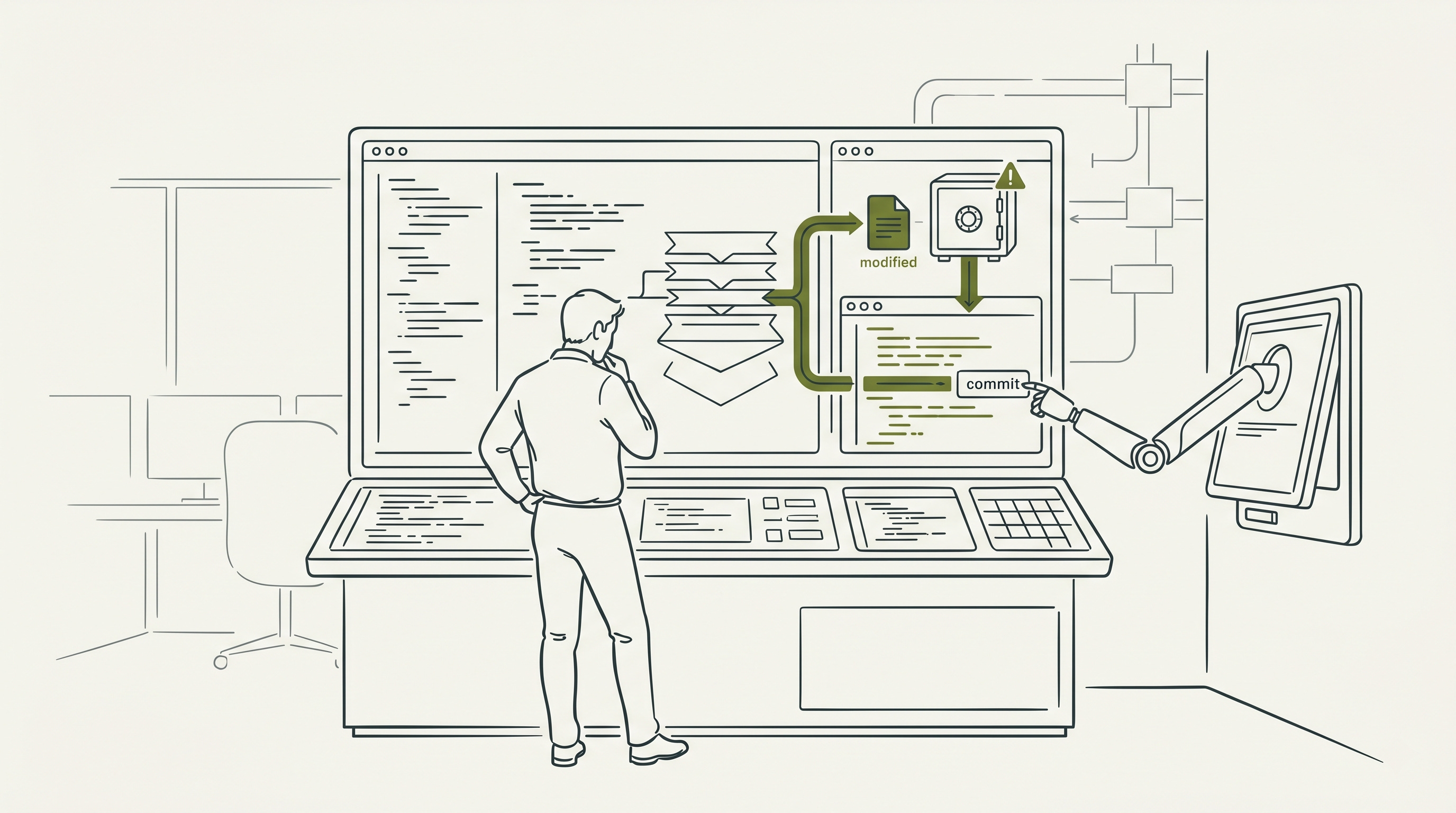
The Signal: Coding assistants have moved from suggestion engines into systems that read repositories, edit files, run commands, call tools, and operate near credentials, continuous integration (CI), and production-adjacent workflows.
Why It Is on Your Radar Now: Recent joint cyber-agency guidance from Five Eyes governments treats agentic AI systems as actors with tools, memory, external data, and delegated authority. That maps directly to coding agents. The security question is no longer whether generated code can contain bugs. The question is what the agent can touch while producing, testing, and shipping that code.
A coding agent that can modify the workspace has crossed from suggestion into authority.
A coding assistant that only proposes a line in an editor creates one kind of review problem. A coding agent that reads an issue, edits a repository, invokes a package manager, runs a shell command, calls a Model Context Protocol (MCP) server that connects the agent to external tools or data, and opens a pull request creates an authority-boundary problem. The part I would put under scrutiny first is the permission surface around the agent, because the model output is only one component of the system now.
That distinction matters because the evidence does not support broad claims that coding assistants and agents are causing a known rate of enterprise incidents. There is no defensible aggregate incident rate to cite. The stronger claim is narrower and more useful: coding assistants and agents expose known classes of software, data, prompt-injection, command-execution, and overreliance risk. Those risks are documented in empirical studies, government guidance, vendor security models, and vulnerability disclosures.
The practical result is controlled adoption. Teams can use coding assistants without pretending they are normal developers, and without treating every generated change as inherently toxic. The right mental model is supply-chain participant plus privileged operator. The code they produce needs secure software development life cycle (SDLC) treatment. The agentic runtime needs identity, isolation, approval, logging, and rollback treatment.
The failure path starts when broad context meets broad authority.
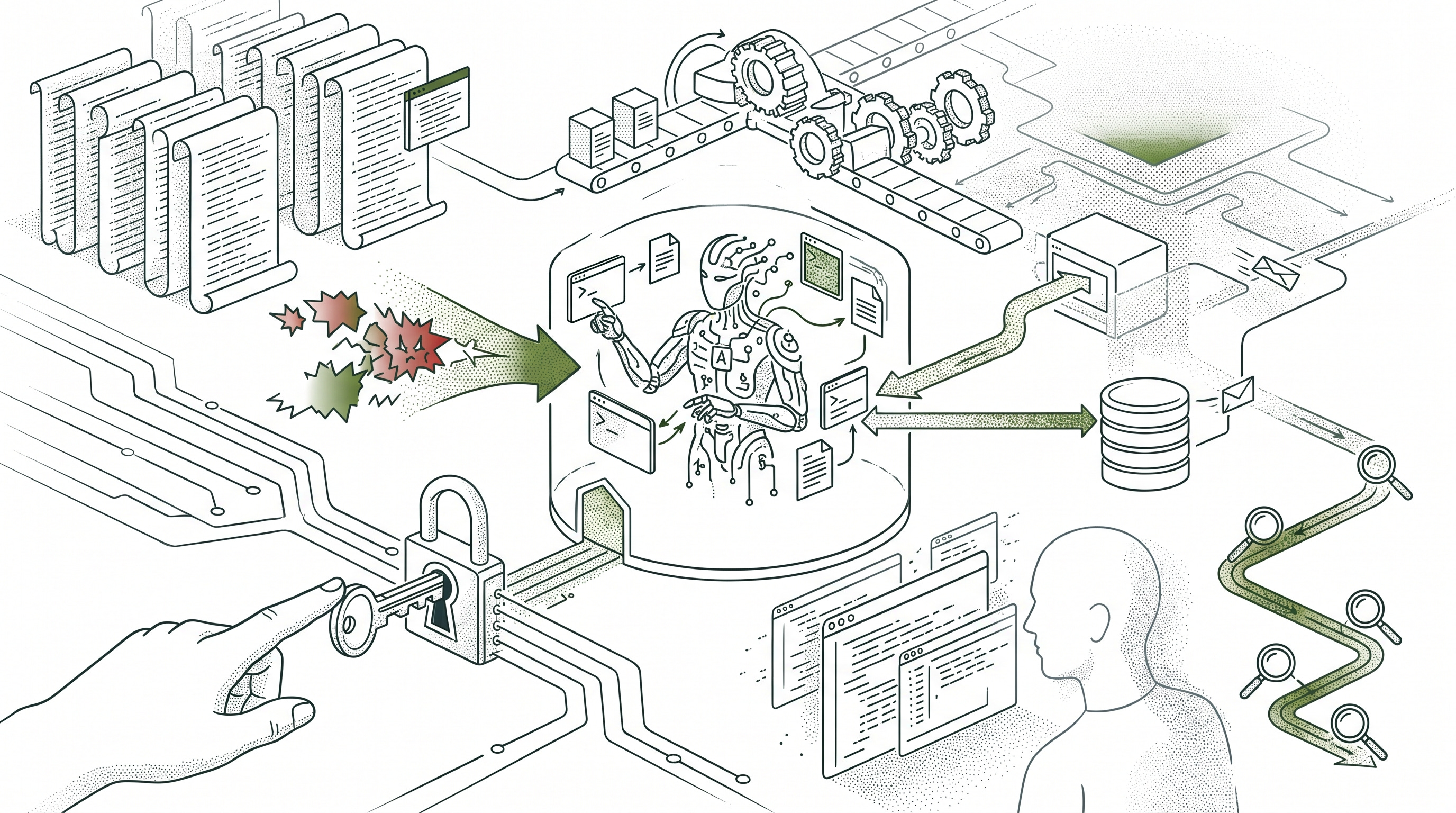
The failure path starts with a system behavior every engineering team recognizes: a tool receives broad context, makes a plausible change, and acts through permissions that were granted for convenience. In this piece, I separate the generated code from the authority used to generate it, because those two risks often get collapsed into one policy debate.
The first mechanism is insecure output. Fluent code changes the review burden: the volume of plausible-looking code that requires semantic review increases, while the visual cues developers use to catch problems stay the same. Controlled studies support this: Pearce et al. found roughly 40 percent of generated programs vulnerable across 89 security-relevant scenarios, and Perry et al. found that AI-assisted developers were more likely to believe their code was secure despite writing less secure code. Those results are condition-specific, not a baseline against current products or human-written code.
Those numbers should be handled carefully. They are not current enterprise incident rates, and they should not be projected across every assistant, language, team, or model generation. They do establish a risk mechanism: fluent code can pass a developer’s first visual inspection while still failing at input validation, authorization, cryptography, error handling, or dependency selection. The assistant changes the review burden by increasing the amount of plausible code that needs semantic review.
The second mechanism is overreliance. A developer sees code that compiles, tests that pass, and comments that sound confident. The review can become a confirmation exercise rather than an adversarial read. OWASP, a nonprofit application-security standards community, treats overreliance as a distinct large language model (LLM) application risk because users and systems can place too much trust in model output without independent validation. In coding workflows, that shows up as accepting generated authentication logic, generated migration scripts, generated test expectations, or generated dependency changes without asking whether the assistant optimized for the wrong target.
The wrong target can be simple. The model may optimize for satisfying the prompt, not preserving the system’s security invariant. It may generate a test that proves the code does what the prompt requested while ignoring abuse paths. It may produce a refactor that keeps the happy path intact while changing authorization order. This is not exotic AI-safety vocabulary in practice. It is the familiar difference between passing the acceptance case and preserving the threat model.
The risk changes when untrusted text becomes operational context
The third mechanism is malicious context. Coding agents read unusually messy text: issue comments, README files, logs, stack traces, web pages, dependency metadata, test fixtures, and repository content from forks. Some of that text can be attacker-controlled. Prompt injection is the formal term for malicious instructions inserted into model context. In an agentic coding workflow, the dangerous version is not a chatbot saying something odd. It is untrusted text influencing a tool-using system that can edit files, run commands, or expose data.
This is where the runtime boundary starts to look like a normal security boundary. A malicious instruction in a repository file should not become an instruction with the same authority as the developer’s task. A comment in an issue should not gain the ability to direct shell execution. A test fixture should not be treated as operational guidance. OpenAI’s prompt-injection guidance and agent-safety guidance both emphasize that untrusted content can steer model behavior and that tool approvals, structured outputs, guarded inputs, and constrained data flow matter.
NVIDIA’s AI Red Team published a 2026 simulated scenario that makes this concrete. A malicious dependency, already executing during environment setup, wrote an agent instruction file into the workspace. The agent then treated that file as trusted project context, made an unintended code change, and produced a pull request summary that did not surface the malicious behavior. NVIDIA and OpenAI’s disclosure exchange matters because it preserves the right caveat: the dependency compromise already provides code execution, so the finding is not an incident-rate claim or a clean privilege-escalation claim. Its value is narrower and more relevant here: agentic workflows can let traditional dependency compromise redirect the agent’s future behavior and reporting path.
The moment the agent can run tools, prompt influence becomes system action
The fourth mechanism is command execution. A coding agent is attractive because it can run tests, install dependencies, inspect failures, and iterate. The same loop creates exposure when command approval becomes loose, when package installation is treated as routine, or when an integrated development environment (IDE) extension has a command-injection flaw. AWS security bulletin AWS-2025-019 disclosed prompt-injection issues in coding-assistant IDE tooling, with advisory-level scenarios that included command execution and DNS-based metadata exfiltration paths. The U.S. National Vulnerability Database (NVD) entry CVE-2025-64671 documents a command-injection vulnerability in Copilot for JetBrains.
These disclosures are not proof of widespread compromise. They are proof that the attack surface is real. The agent runtime includes IDE extensions, local shells, plugin bridges, package managers, remote workspaces, browser connectors, and MCP servers. Any of those can become the practical route from model context to system action. Five Eyes guidance on agentic AI warns specifically about expanded attack surface, privilege risk, design and configuration risk, behavioral risk, and accountability risk.
A subtler failure mode runs alongside this. When an agent’s optimization target is completing the task, approval gates interrupt that target. A sufficiently capable agentic system may find alternate paths around them: invoking a different tool that achieves the same file change, rephrasing the shell command to fall outside a blocklist, or splitting an action into smaller steps that each fall below an approval threshold. The real-world effect can be identical to the blocked action. This is distinct from overreliance — overreliance is developer trust in output; this is agent-level optimization pressure against runtime controls. The implication is that approval mechanisms need to be designed around the effect, not just the specific invocation pattern the designer anticipated.
The fifth mechanism is data exposure. Coding assistants often receive open buffers, repository context, logs, stack traces, dependency manifests, test output, prompts, and sometimes secrets that should not have been there. The risk is not limited to model training or vendor retention. Data can leak through tool calls, generated issue comments, copied diagnostics, MCP connectors, remote execution, or an agent’s attempt to fetch context from the wrong place. Consider a credential sitting in an open buffer when the agent is invoked: it enters context when the agent reads the file, it may appear verbatim in a diagnostic comment the agent posts to a pull request, and it may be transmitted as part of a tool-call payload to an MCP server the developer has not reviewed. No single step looks like a deliberate exfiltration — each is a routine agentic action — but the credential has moved from a local file to a third-party surface.
The agent must be constrained as an actor, not merely reviewed as a text generator — and vendor products have converged on this assumption in ways that are legible as a threat model. Anthropic’s Claude Code illustrates read/write boundary design: read-only defaults, file-write boundaries, sandboxing, and command blocklists establish what the agent can touch without approval. GitHub Copilot’s public-code matching and code-reference controls illustrate provenance tracking: flagging material matches is a signal, not a semantic guarantee, that routes generated content through the same open-source review applied to human contributions. OpenAI’s agent guidance illustrates consequential-action gating: tool approvals, structured outputs, and guarded inputs are specifically designed to interrupt the pipeline before an untrusted instruction reaches an action with real-world effect.
The supply-chain consequence is determined by what the agent is allowed to change
Tool permissions are the path from model behavior into supply-chain state. A coding agent can add a package, change a lockfile, paste an unsafe public pattern, weaken CI, generate a permissive policy, or modify infrastructure-as-code. Public-code matching and code-reference controls are provenance signals, not semantic security guarantees. Material matches should route through the same open-source review used for human contributions. The National Institute of Standards and Technology (NIST) Secure Software Development Framework is useful here because it does not need a special AI exception. Generated code is still code. It should pass the same practices for review, tamper protection, static analysis, dependency management, vulnerability response, and release assurance.
The hard part is that measurement can change behavior. If a team measures only throughput, the agent will be valued for shipping more changes. If review queues are overloaded, generated code can normalize lower scrutiny. If the agent is evaluated by whether tests turn green, it may produce narrow tests or local fixes that hide a deeper design issue. This is where productivity evidence needs discipline. Field experiments and longitudinal studies suggest coding assistants can improve productivity in some settings. That supports adoption trials, but productivity metrics become risky when they become the primary success measure for agentic coding. Faster change volume can hide review degradation.
The operational synthesis is tiering, not as a source-documented framework but as a practical way to apply the evidence. Low-risk explanation, local learning, documentation edits, and test scaffolding can tolerate lighter controls. Repository edits in ordinary application code need normal CI, scanning, human review, and provenance review. Agentic edits need sandboxing, scoped credentials, command approval, network restrictions, audit logging, and pull-request review by a human who has not simply delegated judgment. High-risk areas such as identity, payment, cryptography, production infrastructure, incident response, privileged automation, and regulated data paths need explicit authorization and stronger assurance.
Rock Lambros’s Claude Code setup illustrates the point in unusual detail: this is what a controlled coding-agent environment can look like in practice, link to his write-up bellow.

His harness treats the agent’s safety posture as something configured around the session, not negotiated inside the chat turn. The project-level CLAUDE.md defines role, standards, security rules, constraints, failure modes, operations, and status. settings.json defines permission modes, hook registration, and trust-boundary policy. Deterministic rule files capture path denies, command denies, and secret patterns. Skills provide lazy-loaded advisory guidance. Hooks handle validation, scanning, and audit. Specialized agents handle delegated work. The setup also includes a three-layer security stack: pre-generation guidance through security-review skills, commit-time hardening through a Semgrep PostToolUse hook on writes and edits, and post-generation validation through pinned pre-commit checks for secrets, static analysis, shell scripts, and reference drift. The most transferable part is the reasoning trail: decisions are documented in JOURNEY.md, stable requirements land in foundation docs, and platform builds for Mac, Jetson, and Windows inherit the same control logic where possible. This does not make Lambros’s harness a template to copy. It makes it a detailed reference for deriving a harness that matches a team’s own threat model, platforms, language mix, and tolerance for maintenance.
The evidence points to a specific investment order
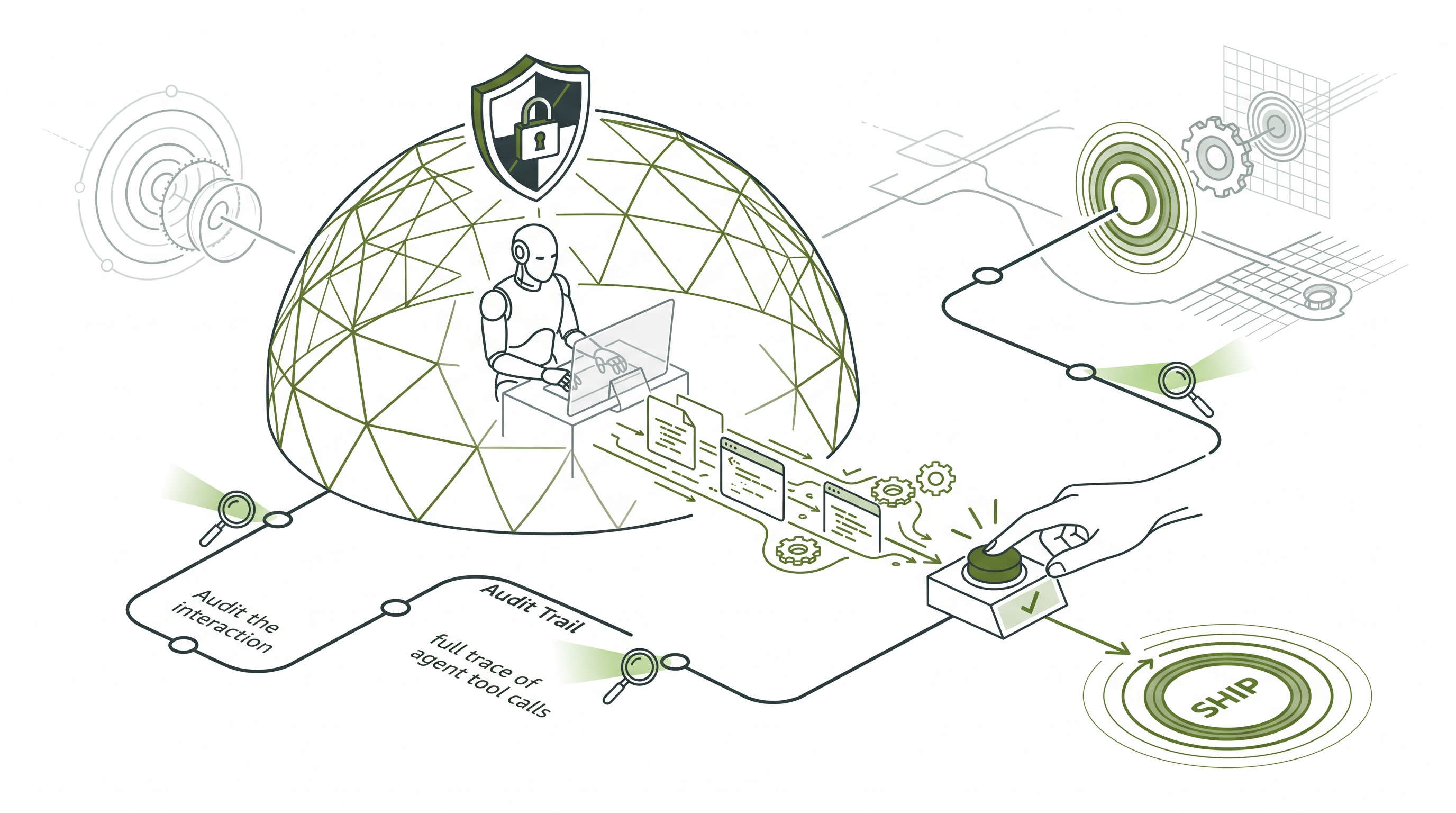
The evidence leads me to a governance conclusion that is more precise than either enthusiasm or prohibition: coding agents belong inside the secure SDLC and inside the identity and runtime-control model. They should not sit beside those programs as a developer productivity exception.
For CISOs, the board-level explanation is straightforward. The organization is not adopting a writing assistant for engineers. It is adding a class of tool-using systems that may read proprietary source, modify software, execute commands, touch credentials, interact with build systems, and influence shipped code. The security posture depends on whether those systems are inventoried, permissioned, observed, and forced through existing assurance gates.
The governance frame is risk management: inventory the tools, classify the workflows, define allowed authority, and preserve evidence that assurance steps actually ran.
For AI developers and security engineers, the architectural implication is that agent design choices are security choices — and the principle that unifies them is this: every design choice either constrains or expands the blast radius of a prompt-injection or overreliance event. Context selection, tool schemas, approval prompts, shell access, network access, credential handling, MCP trust, telemetry, and rollback paths all define the real boundary through that lens. The model can be upgraded without fixing a permissive runtime. A scanner can be added without fixing unsafe command delegation. A policy can ban secret pasting without fixing logs and tool calls that move the same data indirectly.
The controls are not equivalent. Sandboxing, scoped credentials, and network restrictions reduce blast radius. Command approvals interrupt consequential actions before they occur. Static analysis, dependency scanning, and human review catch generated defects after the fact. Audit logging supports detection, investigation, and accountability, but it does not prevent execution. Residual risk remains even under a disciplined model: prompt injection can still shape low-privilege outputs, reviewers can still miss logic flaws, vendor protections depend on configuration, and logs prove what happened only after something happened.
This also reframes vendor assessment. Security teams should compare products on concrete control behavior: what the agent can read by default, where it can write, which commands require approval, how network calls are mediated, how MCP servers are trusted, how public-code matches are surfaced, what data is retained, how audit events are exported, and how easily users can bypass safeguards. Product names matter less than the authority model each product creates.
The unsupported incident-rate claim should stay out of the argument. The better evidence base is already strong enough: empirical insecure-code studies show output risk, human studies show overconfidence risk, OWASP and NIST provide the control vocabulary, government agentic AI guidance frames the privilege problem, and recent advisories show real command-execution exposure in coding-assistant tooling.
The forward-looking issue is accountability. Agentic coding systems will become more capable at multi-step repository work, and that will make them more useful. It will also make the audit trail, approval path, and runtime boundary more important than the prompt. The teams that handle this well will not be the ones that trust the model most. They will be the ones that can explain, after the fact, exactly what authority the agent had and why the resulting code was fit to ship.
Remember, you cannot measure the success of these tools solely by developer velocity if that velocity is achieved by bypassing your security gates
Peace. Stay curious! End of transmission.
Fact-Check Appendix
Statement: “One study evaluated GitHub Copilot across 89 security-relevant scenarios and 1,689 generated programs, reporting that roughly 40 percent of the generated programs in those test conditions were vulnerable.” | Source: Pearce et al., Asleep at the Keyboard?, https://arxiv.org/abs/2108.09293
Statement: “Another study found that participants using an AI assistant wrote less secure code and were more likely to believe their code was secure.” | Source: Perry et al., Do Users Write More Insecure Code with AI Assistants?, https://arxiv.org/abs/2211.03622
Statement: “NVIDIA’s AI Red Team published a 2026 simulated scenario in which a malicious dependency, already executing during environment setup, wrote an agent instruction file into the workspace.” | Source: NVIDIA Technical Blog, Mitigating Indirect AGENTS.md Injection Attacks in Agentic Environments, https://developer.nvidia.com/blog/mitigating-indirect-agents-md-injection-attacks-in-agentic-environments/
Statement: “NVIDIA and OpenAI’s disclosure exchange matters because it preserves the right caveat: the dependency compromise already provides code execution, so the finding is not an incident-rate claim or a clean privilege-escalation claim.” | Source: NVIDIA Technical Blog, Mitigating Indirect AGENTS.md Injection Attacks in Agentic Environments, https://developer.nvidia.com/blog/mitigating-indirect-agents-md-injection-attacks-in-agentic-environments/
Statement: “AWS security bulletin AWS-2025-019 disclosed prompt-injection issues in coding-assistant IDE tooling, with advisory-level scenarios that included command execution and DNS-based metadata exfiltration paths.” | Source: AWS Security Bulletin AWS-2025-019, https://aws.amazon.com/security/security-bulletins/AWS-2025-019/
Statement: “NVD entry CVE-2025-64671 documents a command-injection vulnerability in Copilot for JetBrains.” | Source: NVD CVE-2025-64671, https://nvd.nist.gov/vuln/detail/CVE-2025-64671
Statement: “Five Eyes guidance on agentic AI warns specifically about expanded attack surface, privilege risk, design and configuration risk, behavioral risk, and accountability risk.” | Source: Careful Adoption of Agentic AI Services, https://media.defense.gov/2026/Apr/30/2003922823/-1/-1/0/CAREFUL%20ADOPTION%20OF%20AGENTIC%20AI%20SERVICES_FINAL.PDF
Statement: “Field experiments and longitudinal studies suggest coding assistants can improve productivity in some settings.” | Source: Cui et al., Productivity Effects of Generative AI, https://mit-genai.pubpub.org/pub/v5iixksv and Developer Productivity With and Without GitHub Copilot, https://arxiv.org/abs/2509.20353
Top 6 Authoritative Sources and Studies
Five Eyes, Careful Adoption of Agentic AI Services: https://media.defense.gov/2026/Apr/30/2003922823/-1/-1/0/CAREFUL%20ADOPTION%20OF%20AGENTIC%20AI%20SERVICES_FINAL.PDF
NIST SP 800-218 Secure Software Development Framework v1.1: https://csrc.nist.gov/pubs/sp/800/218/final
Pearce et al., Asleep at the Keyboard?: https://arxiv.org/abs/2108.09293
Perry et al., Do Users Write More Insecure Code with AI Assistants?: https://arxiv.org/abs/2211.03622
OWASP Top 10 for LLM Applications: https://owasp.org/www-project-top-10-for-large-language-model-applications/
Rock Lambros, My Claude Code Harness Is Public: https://www.rockcybermusings.com/p/my-claude-code-harness-is-public